In Memoriam: Dolly Parton (1946 – 2026)
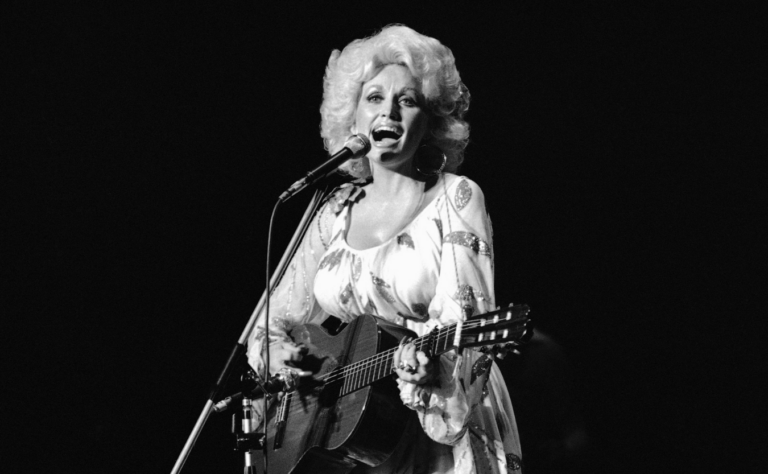
It’s hard to imagine a world without Dolly Parton in it. She could easily brighten everyone’s day with her wicked sense of humor, her sparkling smile, her canny wisdom, her ingenious lyrical sense, and her wide-ranging embrace of every musical style, from bluegrass to rock. We’re bereft, but the narrative section of her classic “I Will Always Love You” could easily serve as her farewell message to us: “And I hope life treats you kind/ And I hope that you have all/ You ever dreamed of/ Oh, I do wish you joy/ And I wish you happiness/ But above all this I wish you love.”
Dolly Rebecca Parton (January 19, 1946-August, 25, 2006) died peacefully today in Nashville, Tennessee. Over the past several months, she had canceled or postponed appearances due to her health. Her loss reverberates loudly through the music world as well as the world at large. As much as she commanded stages with her towering vocals and rollicking performances, she also shined through her philanthropic work, her acting, and her writing of plays and novels.
Born on January 19, 1946, Dolly Parton was raised in humble surroundings in the Smoky Mountains in East Tennessee, an area she never strayed far from. Parton grew up in a home filled with music, singing with her family, writing songs, and gathering with her family to listen to Grand Ole Opry broadcasts. She wrote her first song, “Little Tiny Tasseltop,” when she was five, and her mother wrote down the lyrics for her. Parton loved singing, and she began appearing on local television radio shows when she was 10. At the age of 13, she debuted on the Grand Ole Opry, launching what would become a life of following her passion and of sharing her gifts with the world.
Parton turned her restless imagination—she often remarked that she slept just a few hours at night—to her home in the mountains to write songs about rural characters and their struggles, losses, love, and hope. Never far from a pen and paper, she was constantly writing; she told the New York Times in a 2002 interview: “Writing’s just as natural to me as getting up and cooking breakfast. I ain’t never far away from a pencil and paper or a tape recorder. I write every day . . . not everything I write is good, but it’s all good for me—like therapy.”
Dolly Parton signed her first record contract in 1965, when she was 19, and released her debut album ‘Hello, I’m Dolly,’ containing the singles “Dumb Blonde” and “Something Fishy.” Two years later, in 1967, she joined Porter Wagoner on his television show ‘The Porter Wagoner Show’ until 1974. In 1969, Dolly Parton became a member of the Grand Ole Opry.
After she left The Porter Wagoner Show in 1974, her solo career soared, being named Female Vocalist of the Year in 1975 and 1976 by the Country Music Association. In 1978, the CMA named her CMA Entertainer of the Year, in part because of the success of her pop country hits “Here You Come Again” and “Heartbreaker.”
In the 1980s, Dolly turned to acting, starring alongside Jane Fonda and Lily Tomlin in the acclaimed ‘9 to 5’ for which she wrote the theme song, which went to #1 on the Billboard Hot 100 charts and became a working women’s anthem. Her movie roles included ‘The Best Little Whorehouse in Texas,’ ‘Steel Magnolia,’ ‘Rhinestone,’ and ‘Joyful Noise.’ Not content to be in front of the camera only, Dolly opened a production company that put together a number of television specials, including her variety show, which aired from 1987-1988.
Dolly followed her passions into other arenas, too, opening the theme park Dollywood in Pigeon Forge, Tennessee in 1986. Out of her deep love for the communities in her East Tennessee mountain home, Parton founded The Dollywood Foundation in 1988, providing scholarships that enabled students to stay in school. Reaching far beyond the borders of East Tennessee, Parton founded The Imagination Library in 1995, which gives free books to children between birth and age five, fostering and encouraging a love of reading.
Over the course of her career, Parton released 50 studio albums, ranging from country to bluegrass to rock to pop and gospel. She collaborated with other artists, and her work with Linda Ronstadt and Emmylou Harris on ‘Trio’ (1987), which went platinum, and ‘Trio II’ (1999) remains a treasure for the crystalline beauty of this trio of voices. Dolly and joined up with Tammy Wynette and Loretta Lynn for 1993’s ‘Honky Tonk Angels.’ Her spiraling gospel song “Travelin’ Thru,” from the film ‘Transamerica,’ was nominated for an Oscar and expressed Parton’s expansive love and acceptance for everyone.
Honors include induction into the Country Music Hall of Fame in 1999, the Songwriters Hall of Fame in 2001, the Rock & Roll Hall of Fame in 2022; she was awarded the National Medal of Arts in 2005 and received a Kennedy Center Honors in 2006.
Acclaimed country songwriter Bill Anderson speaks for all of us: “The news of her passing has rocked my world, but as we sang together back in 2023, ‘Someday It’ll All Make Sense.’”
Dolly Parton’s fierce and loving spirit, and her warmth and wisdom endure in her songs, and as much as we’re bereft, we will always love her.